TMA Lab · R&D · GPU driver
Apple shipsno driver forthis card.So we wrote one.

An AMD Radeon RX 7600M XT in a Thunderbolt enclosure, plugged into a 2019 Intel MacBook Pro. Apple's Mac drivers stop at RDNA2, and this card is RDNA3, so macOS only saw a box with a fan. We brought it up ourselves, from the kernel to Metal.
- red pixels in the first Metal frame: the exact diagonal
- 32,640
- Metal app in a window, no copy between the card and the screen
- 60 fps
- largest pixel gap with Apple's own driver on Core Animation
- 5/255
- for the card to copy a desktop frame to its screen
- 3.6 ms
The hardware
- Card
- AMD Radeon RX 7600M XT, 8 GB
- Chip
- Navi 33 · gfx1102 · RDNA3
- Link
- Thunderbolt 3 enclosure, PCIe Gen4 x8 to the card
- Host
- MacBook Pro 16" 2019 · Intel Core i9 · Apple T2
- System
- macOS Tahoe 26.7
- Apple support
- None. Apple's drivers stop at RDNA2.
How it's built
Four layers,bottom up.
- 04
Apps
Ordinary Metal apps and Core Animation, unchanged. To them the card is just another Metal device.
- 03
Metal bridge
A Metal plug-in that hands every call, shaders included, to a Metal-on-Vulkan runtime running on the card.
- 02
Vulkan
Mesa's RADV driver for gfx1102, running on macOS on top of our kernel interface.
- 01
Kernel extension
Wakes the card up: security and power firmware, memory and page tables, interrupts, the command queues and the display engine.
- 00AMD Radeon RX 7600M XT · over Thunderbolt
Lab log
Stepby step.
Detection
Our kernel extension claims the card on a real Mac and reads it: Navi 33, 8 GB of video memory.
Display
First image out of the card's own display port, then the macOS desktop on a screen plugged into it, up to 100 Hz.
Vulkan
Command processor and scheduler up. Vulkan passes its first tests: device info, compute, a triangle, an endurance run.
Metal
First Metal shader on the card, then the first Metal drawing: the red triangle at the top of this page.
Windows
A Metal app runs in a window at 60 fps, then with zero copy between the card's memory and the window.
Core Animation
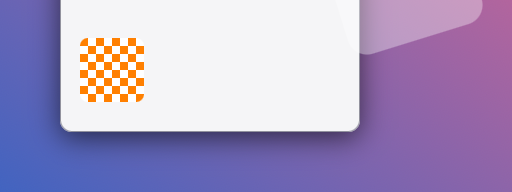
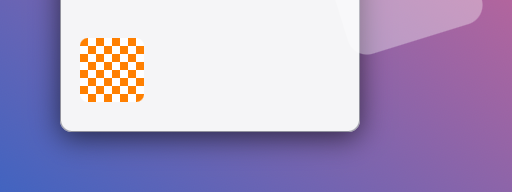
Core Animation renders on the card and matches Apple's driver within 5 levels out of 255.
Desktop
The card takes over copying the desktop to its screen: 3.6 ms a frame.
The check
Same scene.Two drivers.
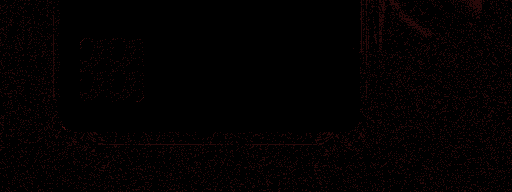
We rendered the same Core Animation test scene twice: once on the MacBook's built-in Radeon Pro 5500M with Apple's driver, once on the RX 7600M XT with ours. Then we compared every pixel of the full frame. Below, the same detail of all three: Apple's render, ours, and the difference amplified 40 times.
- pixels compared, full frame
- 196,608
- differ by more than 2 levels (0.012 %)
- 23
- largest difference, from rounding
- 5/255
What it is, and what it isn't
Our hardware, our use
It runs on a card and a Mac we own. Nothing is sold and nothing is offered for download.
No Apple code
No Apple code was copied. This is interoperability work, done on our own machine.
Not finished
Apps render on the card today. Next step: the macOS window server compositing the whole desktop on it.
Built on open source
We didn't start from zero, and we say so. These projects made this bring-up possible:
Why a games studio does this
Nobody made the tool.So we made it.
Same reason we built TMEngine, our in-house engine, instead of shipping video. If your stack has a problem everyone has quietly agreed can't be fixed, send it to us.
TMA · AMD, Radeon, Apple, Mac, macOS and Metal are trademarks of their owners. Not affiliated with or endorsed by AMD or Apple.